Lea
The Pale Blue EyeLea is Artemus Marquis’s sister, a gifted performer whose warmth and lively intelligence emerge in social encounters with Edgar Allan Poe. She resists his elevation of women into immortal ideals, speaks instead for the pleasures of ordinary life, and is later found by him lying unresponsive after a violent fit. Her name also becomes the focus of a tense exchange between cadets over Leroy Fry, an insinuation that places her at the center of male speculation without establishing what she knew or did.
Identity and Social Setting
At a gathering hosted by Dr. Daniel Marquis, Lea performs on the pianoforte and sings sentimental songs. Poe hears a natural contralto whose voice, in his judgment, is strained by the high keys; he thinks the song From Greenland's Icy Mountains would have suited her better transposed down a fourth or fifth. The performance is both a social accomplishment and an occasion for her brother to display his admiration.
Poe observes Artemus insisting that he sit beside him and repeatedly checking his reaction as Lea plays. Artemus praises her musicianship and recounts that she has played since she was three. In the pauses between songs, Lea gives her brother smiles that Poe reads as meant for him alone. He describes their affection as reciprocal and their sibling rapport as unusually close, a bond he says he himself never experienced with his own siblings.
Wit and the Conversation with Poe
Lea’s exchange with Poe turns on his account of Helen, the imagined woman in his poem. When Poe describes Helen as statuelike and granted immortality by Eros, Lea responds that a healthy girl should not have to remain confined to a window niche: she might walk in the woods, talk with friends, or go to a ball. Her response brings bodily freedom and ordinary companionship into contrast with the poet’s idealized, motionless figure.
She extends the contrast with a teasing observation that she cannot imagine a woman wanting immortality when a good joke, or a single caress, might be enough. She blushes after saying it, then redirects the conversation toward Poe’s allusions to travel. Her humor is not simply a rejection of his poetic language; it reveals her ability to meet it playfully while insisting on forms of pleasure that belong to living experience.
When Poe later asks for an audience with her, Lea answers with a wry question about whether he means to meet at Flirtation Walk, Gee’s Point, or another secluded place favored by amorous cadets. The exchange shows her alert to the implications of his request and comfortable teasing him about them. The available account ends with Poe beginning to clarify where he wants to meet, so it does not establish what follows from the invitation.
Collapse and Poe’s Response
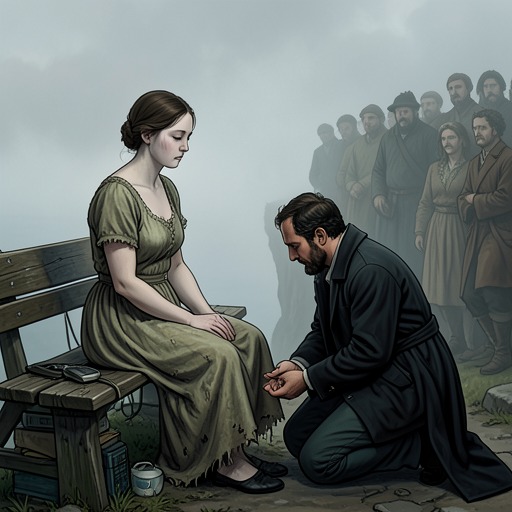
At a later encounter, Lea disappears from the place where Poe last saw her. His account emphasizes the urgency of his search: he runs through the grounds, calls for her, and even looks over the cemetery bluff, fearing that she may have fallen. He eventually spots a foot through the branches of a rhododendron bush, less than fifty yards from where she had been standing, and finds her pallid and inert on hard, rocky ground.
Poe sees her eyes turned upward so that the irises disappear beneath her eyelids, saliva around her lips, and pronounced trembling throughout her body. She does not speak. He remains beside her until the fit begins to subside, then watches for the rise of her breast, the flutter of her eyelashes, and the dilation of her nostrils. These signs reassure him that she is alive. The episode is presented through his alarmed observation; the account here does not identify a diagnosis or explain the cause of the fit.
Lea in the Dispute over Leroy Fry
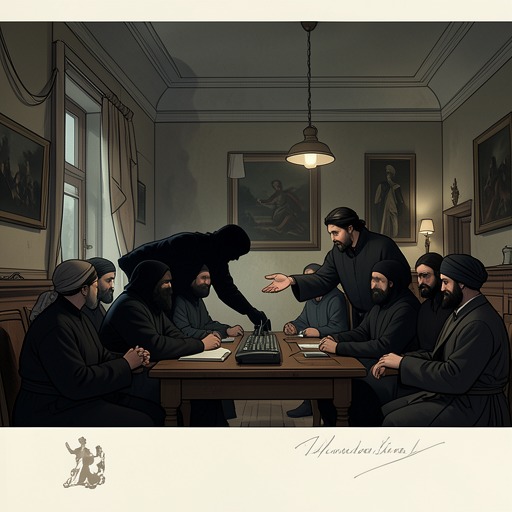
Lea’s name enters another scene through Randolph Ballinger’s remark at a gathering where the cadets discuss Leroy Fry’s death. The assembled men have heard both that Fry was generally believed to have killed himself and that he had been setting out for an assignation. When one cadet asks what lady would have agreed to meet him, Ballinger asks Artemus whether his sister had dazzled Fry.
The remark makes Lea the implied subject of a sexual insinuation, and the room falls silent as those present anticipate a challenge to her honor. Artemus restrains the narrator, Augustus Landor, and directs Ballinger back to his own closeness with Fry. Ballinger replies that he was not as close to Fry as Artemus. Artemus offers no direct answer to the implication about Lea; instead, he and Ballinger break into strained, nearly hysterical laughter, and the group avoids raising Fry’s name again. The episode records what men say about Lea, not evidence of any meeting or relationship between her and Fry. Its dramatic force lies in the way her reputation becomes a contest among them while she is not present to speak for herself.